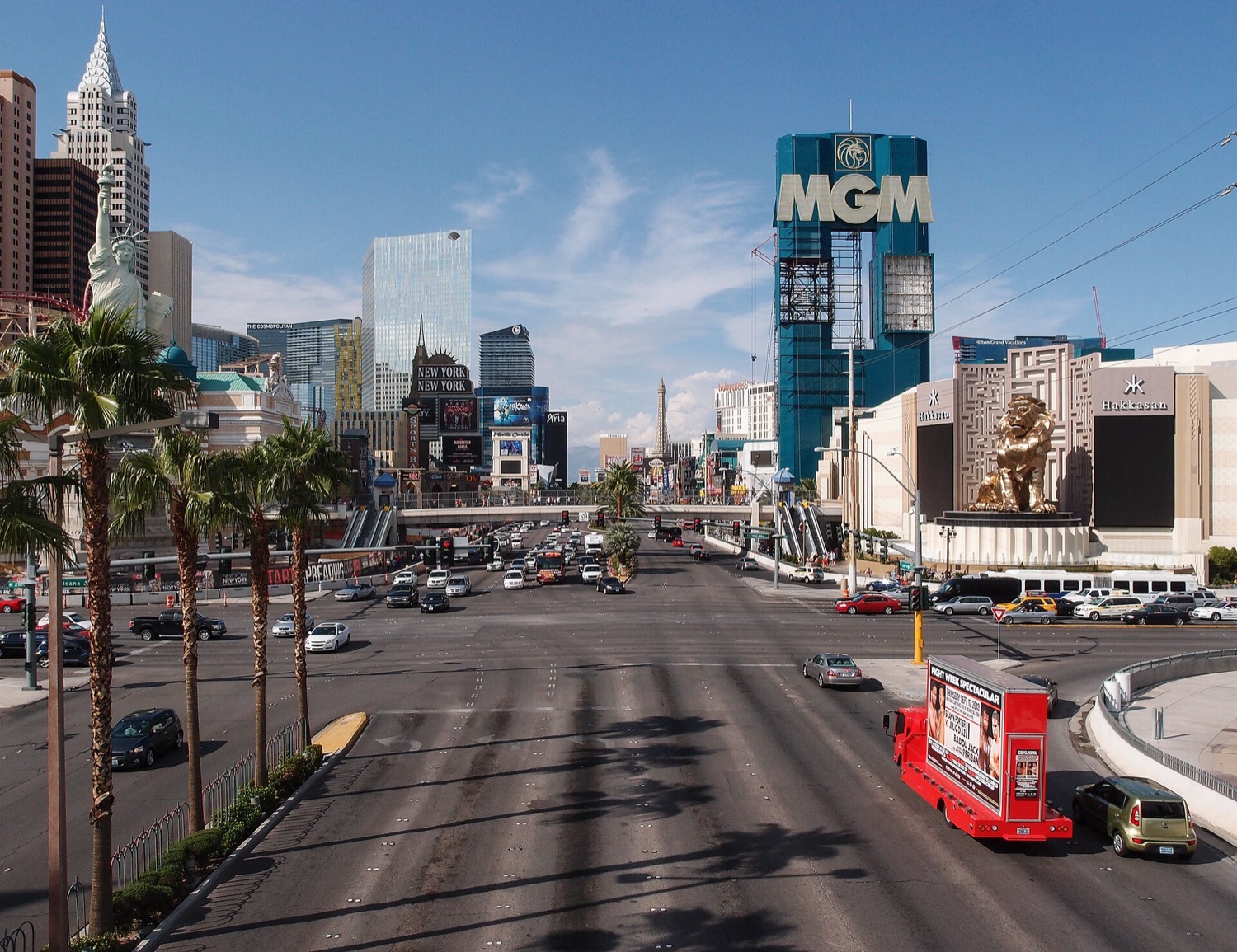
Las Vegas is built for fun: casinos, shows, pools and restaurants that never seem to close. It also sits in the Mojave Desert, with fierce summer heat, very dry air and long distances on foot, and visitors who arrive from cooler climates are often caught out.
Respect the desert heat
From June to September daytime temperatures in Las Vegas regularly pass 38°C (100°F) and on the hottest days exceed 43°C (110°F). Because the air is so dry, sweat evaporates almost instantly, so you may not feel sweaty even while losing a lot of fluid. Pavements and car interiors get hot enough to burn skin.
| Heat exhaustion | Heat stroke (emergency) | |
|---|---|---|
| Skin | Cool, pale, clammy, heavy sweating | Hot, red; may be dry or damp |
| Body temperature | Normal to raised | Very high, 40°C (104°F) or more |
| Mind | Tired, dizzy, headache | Confused, slurred speech, may collapse |
| Other | Nausea, cramps, fast weak pulse | Fast strong pulse, seizures |
| What to do | Move somewhere cool, lie down, sip water, cool the skin; seek help if not better within 30 minutes | Call 911, cool the person immediately with water and fanning while waiting |
Drink before you are thirsty
- Carry a refillable water bottle and drink regularly through the day, more if you are walking or by the pool.
- For long days outdoors, add drinks with electrolytes or salty snacks.
- Alternate alcoholic drinks with water. Free drinks at the tables and slot machines, pool parties and sun are a combination that sends many visitors to urgent care.
- Check your urine: pale yellow is good, dark means drink more (see how much water you need).
Sun and dry air
Use a broad-spectrum sunscreen of SPF 30 or higher, reapply every two hours and after swimming, and wear a hat and sunglasses. The dry air also dries out eyes, nose and lips; saline nasal spray, lubricating eye drops and lip balm help, especially for contact lens wearers. Casino floors are air-conditioned and can feel cold after the street, so carry a light layer.
Walking the Strip
The Las Vegas Strip is about four miles (some 6.5 km) long, and resorts that look next door can be a long walk apart through vast casino floors. Wear comfortable shoes you have already broken in, plan routes using indoor walkways and the monorail in the heat of the day, and treat any blister early. All that walking is a good way to meet the activity guidelines while on holiday.
Sleep in a city without clocks
Casinos have few windows and clocks, shows and clubs run late, and many visitors also cross time zones. Keep a rough wake-up time, get morning daylight, plan a couple of quieter nights and use the hotel room's blackout curtains. Being well rested makes for better decisions at the poker table, too; see risk, reward and dopamine.
If you get ill
Las Vegas has pharmacies, urgent care centres and large hospitals. For anything life-threatening, call 911. Visitors from outside the US should have travel insurance that covers medical treatment, as US care is expensive; read our guide to medical bills and insurance claims. If you have a heart or lung condition, diabetes or are pregnant, talk to your doctor before a summer trip and bring enough medication.
Based on guidance from: CDC, US National Weather Service, NHS.


