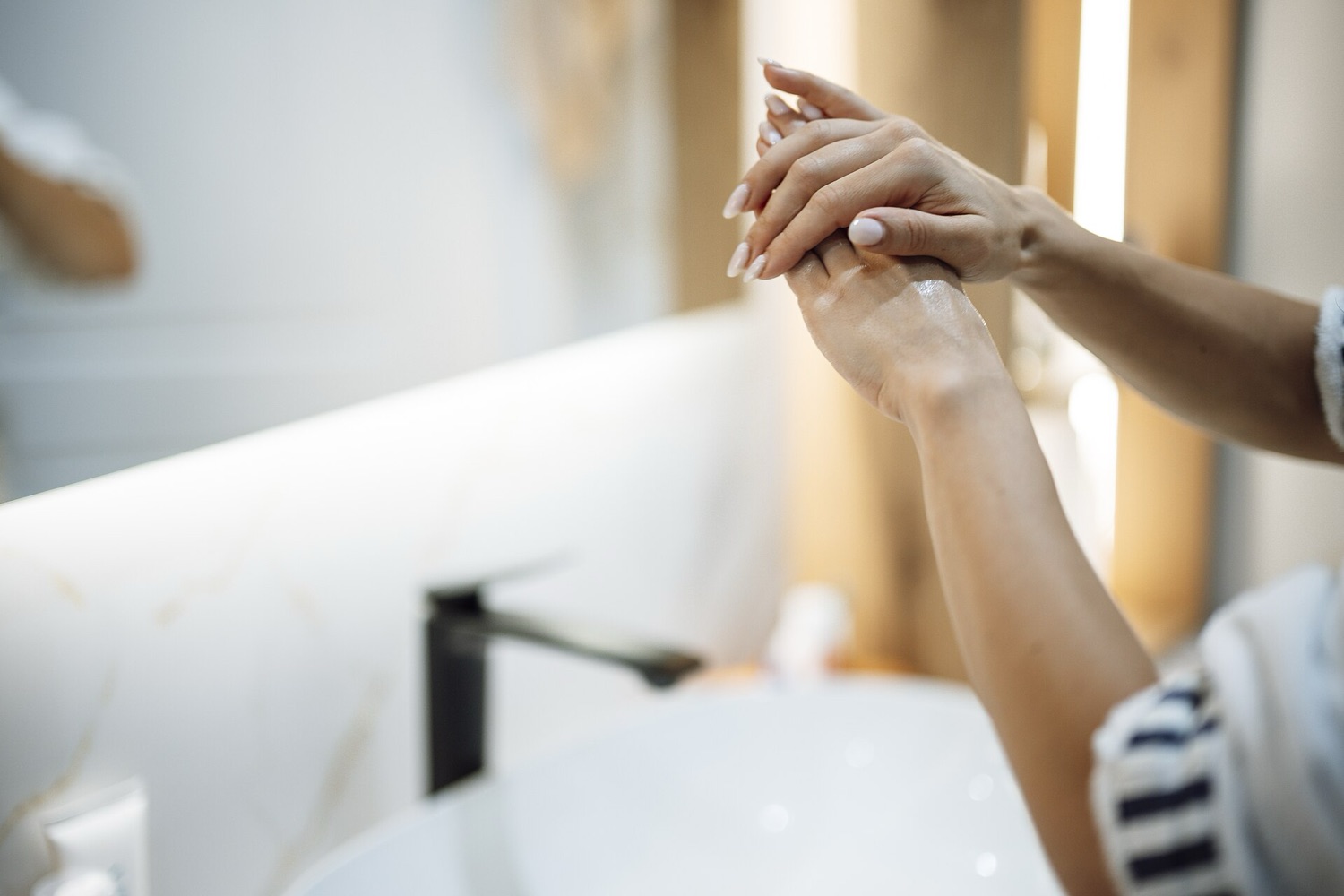
Many common infections, from stomach bugs to colds, spread on hands. Washing with soap and water is cheap, quick and one of the most effective ways to stop them. Studies summarised by the CDC suggest community handwashing programmes cut diarrhoeal illness by roughly a quarter to a third and respiratory infections by a smaller but real margin.
How to wash properly
- Wet your hands with clean running water and apply soap.
- Lather the backs of your hands, between your fingers and under your nails.
- Scrub for at least 20 seconds, about the time it takes to hum "Happy Birthday" twice.
- Rinse well under running water.
- Dry with a clean towel or air dryer. Damp hands pick up and spread germs more easily.
Key moments to wash
- Before, during and after preparing food, and before eating.
- After using the toilet or changing a nappy.
- After blowing your nose, coughing or sneezing.
- Before and after caring for someone who is ill, and before and after treating a cut.
- After touching animals, pet food or rubbish.
When sanitiser is (and is not) enough
If soap and water are not available, an alcohol-based hand sanitiser with at least 60% alcohol is a good substitute. Cover all surfaces and rub until dry. Sanitiser works less well on visibly dirty or greasy hands and does not reliably kill some germs, notably norovirus, the "winter vomiting bug", and C. difficile. In those situations soap and water are better.
High-touch places: buffets, chips and cards
Shared surfaces are where germs move from person to person. Think of lift buttons, buffet serving spoons, touchscreens, and in a casino the cards, chips, slot machine buttons and table rails that pass through hundreds of hands in a night. You do not need to avoid them, just wash before you eat, especially at a buffet or after a session at the tables. On cruise ships, where norovirus outbreaks are well known, soap-and-water handwashing matters even more; see our guide to health on casino cruises.
Based on guidance from: CDC, World Health Organization, NHS.


